
Baby Sign Language (LSB), inspired by French Sign Language (LSF), utilizes gestures and facial expressions for pre-verbal communication.
It’s a growing trend, offering a unique way to connect with your little one, and resources like LSB PDF guides are readily available;
What is Baby Sign Language?
Baby Sign Language (BSL) isn’t a separate, fully developed language, but rather an adaptation of established sign languages, most notably French Sign Language (LSF). It’s a communication system employing gestures, facial expressions, and body language to convey meaning before a baby develops the verbal skills to speak.
Essentially, BSL bridges the communication gap, allowing infants to express their needs, wants, and emotions earlier than they could with spoken words. Numerous resources, including downloadable LSB PDF guides and apps like Bébé Signe, offer parents a structured approach to learning and implementing these signs. It’s about fostering connection and understanding, reducing frustration for both baby and caregiver.
The Connection to French Sign Language (LSF)
Baby Sign Language (BSL) draws heavily from French Sign Language (LSF), serving as its primary inspiration. While not a direct translation, BSL borrows many signs directly from LSF, simplifying them for easier execution by babies and their parents. This connection provides a solid linguistic foundation, ensuring a degree of consistency and accessibility.
Resources like LSB PDF guides often highlight the LSF origins of specific signs, aiding comprehension. Bébé Signe, a popular application, also reflects this influence. Understanding this link is beneficial, as it opens doors to further exploration of LSF should you wish to expand your signing vocabulary beyond the basics. It’s a respectful nod to the rich history of sign language.
Benefits of Using Baby Sign Language
Baby Sign Language (BSL) offers numerous advantages, fostering communication before verbal skills develop. It reduces frustration for both baby and parents, as needs and emotions can be expressed more clearly. Early communication boosts cognitive development and strengthens the parent-child bond.
Resources like a LSB PDF download emphasize that signing isn’t about delaying speech; it often accelerates it. It provides a bridge to understanding a baby’s world, allowing for responsive parenting. Initiating signing, even with a few basic signs, can significantly improve interactions and create a more harmonious environment. It’s a proactive approach to communication!

Getting Started with Baby Sign Language
Begin your journey with a LSB PDF guide! Start slowly, consistently using signs during daily routines, and remember patience is key to success.
When to Start Signing with Your Baby
Determining the ideal time to introduce Baby Sign Language is a common question for parents. While babies develop at their own pace, most experts suggest beginning around 6 months of age. However, you can start observing your baby’s responses to gestures even earlier.
A LSB PDF resource will often emphasize that even before a baby can verbally communicate, they possess the cognitive ability to understand and mimic simple signs. Starting early allows for gradual exposure and builds a foundation for communication. Don’t be discouraged if your baby doesn’t immediately replicate the signs; consistent modeling is crucial. Remember, the goal isn’t instant replication, but fostering a connection and providing a means of expression before spoken language fully develops.
Initial Signs to Teach Your Baby
Starting with practical, everyday signs is key to successful Baby Sign Language implementation. A helpful LSB PDF guide will typically recommend beginning with signs for needs and desires. Excellent choices include “milk,” “eat,” “drink,” “more,” and “help.” These are concepts your baby encounters frequently, making them easier to associate with the corresponding sign.
Additionally, signs for common objects like “book,” “bath,” or “sleep” are beneficial. Don’t underestimate the power of signs for emotions like “happy” or “sad.” Remember to pair the sign with the spoken word consistently. Repetition and enthusiastic modeling, as detailed in many LSB PDF resources, are vital for your baby’s comprehension and eventual use of the signs.
Resources for Learning Baby Sign Language
Numerous resources exist to support your Baby Sign Language journey. Many websites offer free downloadable sign cards, like the 52-card set, providing a visual dictionary for common signs. Several LSB PDF guides are available, often detailing 20 essential signs for early communication, offering a structured learning path.
Furthermore, applications like Bébé Signe provide interactive lessons and a vast library of signs, with both free and paid content. Online communities and forums connect parents sharing experiences and tips. Books dedicated to Baby Sign Language offer comprehensive instruction and guidance. Exploring these resources, including readily available LSB PDF materials, will empower you to confidently teach your baby to sign.

Free Resources for Baby Sign Language
Numerous free resources, including downloadable LSB PDF sign cards (52 & 9 cards) and 20 essential sign lists, are available online to begin learning!
Free Downloadable Sign Cards (52 Cards)
Discover a comprehensive set of 52 free downloadable sign cards, a fantastic resource for initiating your baby’s journey into sign language! These cards, readily available online, offer a visually engaging and practical way to learn essential signs.
Created with a “super sympa” graphic design, as noted by an educator specializing in sign language, these cards are not only effective but also appealing. They provide a solid foundation for building a shared communication system with your baby before they develop verbal skills.
This resource is particularly valuable for parents seeking a free and accessible introduction to LSB, offering a diverse range of signs to get you started. Download your LSB PDF card set today!
20 Essential Signs for Baby Communication (Free Download)
Unlock early communication with your baby through a free download of 20 essential signs! This valuable resource, often available as a LSB PDF, focuses on core signs to address fundamental needs and emotions.
These signs, curated from resources like Sophie Dolce’s work, cover crucial concepts such as “help,” “love,” “attention,” “goodbye,” “pain,” “bath,” and “beautiful.” Learning these signs empowers you to understand your baby’s wants and feelings before they can verbally express them.
This is an excellent starting point for parents new to baby sign language, providing a practical and accessible way to begin building a communicative bond. Download your free LSB PDF today!
Printable Baby Sign Language Cards (9 Cards)
Jumpstart your baby’s communication journey with a set of 9 printable Baby Sign Language cards! These readily available resources, often found as a convenient LSB PDF download, offer a fantastic introduction to basic signs for young children.
Designed for use from around 6 months, these cards provide a visual and tactile learning experience. Regularly incorporating these signs into daily interactions helps your baby associate gestures with meaning. This simple yet effective method fosters early communication skills and strengthens the parent-child bond.
Find your free LSB PDF with these printable cards and begin signing with your little one today!

Baby Sign Language Applications
Digital tools, like the Bébé Signe app (launched in 2016), offer accessible LSB PDF-style learning. These apps provide hundreds of signs, both free and premium.
Bébé Signe Application Overview
Bébé Signe is a dedicated mobile application designed to facilitate early communication with babies through sign language. Launched in 2016 following a successful crowdfunding campaign, it provides a structured approach to learning Baby Sign Language (LSB). The app aims to bridge the communication gap before a baby develops verbal skills, offering a visual and interactive learning experience for both parent and child.
Essentially, it functions as a digital equivalent to a LSB PDF guide, but with the added benefit of video demonstrations. The application’s interface is user-friendly, making it easy to navigate and find specific signs. It’s built around the principle that babies can understand and use signs much earlier than they can speak, fostering a stronger connection and reducing frustration for both parties.
Features of the Bébé Signe App (Free & Paid)
The Bébé Signe app offers a tiered system, beginning with 20 free signs, providing a solid foundation for initial communication. This free access allows users to experience the app’s functionality before committing to a subscription. The paid version unlocks a comprehensive library of over 400 signs, categorized by themes like animals, colors, and everyday actions – mirroring the organization found in a detailed LSB PDF resource.
Additional features include high-quality video demonstrations of each sign, ensuring correct handshapes and movements. The app also allows users to create personalized lists of frequently used signs, streamlining the learning process. It’s a dynamic alternative to static LSB PDF materials, offering an engaging and interactive learning experience.

Core Signs for Daily Communication
Essential signs like “help,” “more,” “happy,” and basic needs (“milk,” “food”) form the foundation of baby sign language, often detailed in a LSB PDF guide;
Signs for Needs (Help, More)
Communicating basic needs is often the first step in baby sign language. The sign for “help” typically involves a flat hand moving upwards, as if lifting a weight, demonstrating a request for assistance.
The sign for “more” is commonly made by bringing the fingertips of both hands together, then separating them slightly – a visual representation of wanting an additional amount.
These foundational signs, frequently illustrated in a LSB PDF resource, empower babies to express their requirements before they develop verbal skills. Mastering these early signs reduces frustration for both baby and caregiver, fostering a stronger connection and understanding. Consistent practice, guided by a LSB PDF, is key to successful implementation.
Signs for Emotions (Happy, Sad, Angry)
Expressing emotions is crucial for a baby’s development, and sign language provides a powerful tool. The sign for “happy” often involves open palms brushing upwards on the cheeks, mimicking a smile. For “sad,” downturned hands near the face represent tears.
“Angry” is typically shown with flat hands moving in a claw-like motion, demonstrating frustration. These emotional signs, frequently detailed in a LSB PDF guide, help caregivers understand their baby’s feelings.
Learning these signs, as presented in a LSB PDF, fosters emotional intelligence and strengthens the parent-child bond. Consistent use and modeling of these signs will help your baby communicate their inner world effectively.
Signs for Common Objects (Milk, Water, Food)
Essential daily needs are easily communicated through baby sign language. The sign for “milk” often involves squeezing the hand, mimicking milking a cow. “Water” is typically shown by touching the fingertips to the mouth, resembling drinking. For “food,” bringing fingertips to the mouth repeatedly illustrates eating.
These foundational signs, frequently illustrated in a comprehensive LSB PDF, reduce frustration for both baby and caregiver. A LSB PDF guide will demonstrate the correct handshapes and movements;
Consistent use of these signs, as detailed in a LSB PDF, empowers your baby to express their basic needs and desires, fostering independence and strengthening communication.

Expanding Your Baby’s Sign Vocabulary
Beyond basic needs, introduce signs for animals, colors, and actions! A helpful LSB PDF resource can guide you through expanding your baby’s communication skills.
Signs for Animals (Cat, Dog, Bird)
Introducing animal signs is a delightful way to enrich your baby’s vocabulary! The sign for cat often mimics whiskers with fingers near the face, while dog can be represented by patting your leg – like calling a furry friend. For bird, a fluttering hand gesture beautifully illustrates flight.
Many LSB PDF resources demonstrate these signs visually, making learning easier for both parent and baby. Consistent practice is key; incorporate these signs during playtime with stuffed animals or while reading animal-themed books. Remember to pair the sign with the spoken word to reinforce learning. These early signs foster a deeper connection and understanding between you and your child, opening up a world of pre-verbal communication.
Signs for Colors (Red, Blue, Yellow)
Teaching color signs expands your baby’s understanding of the world! The sign for red often involves touching the tip of your nose, while blue can be shown by an open palm facing outwards. For yellow, a ‘Y’ handshape near the cheek is commonly used.
Numerous LSB PDF guides provide clear visual demonstrations of these signs. Integrate them into daily routines – point out a red toy while signing “red,” or name a blue object during playtime. Consistency and repetition are vital. Pairing the sign with the spoken color name reinforces learning. These early color signs stimulate cognitive development and enhance communication skills, fostering a richer interaction with your little one.
Signs for Actions (Eat, Sleep, Play)
Essential action signs like eat, sleep, and play are incredibly useful for daily communication. The sign for eat typically involves bringing your hand to your mouth. For sleep, an open palm moves across your cheek, mimicking closing eyes. Play is often shown with open hands fluttering forward.
Many LSB PDF resources visually demonstrate these signs. Incorporate them during relevant activities – sign “eat” before meals, “sleep” during bedtime routines, and “play” during playtime. Repetition and consistency are key to your baby’s comprehension. These signs empower your little one to express their needs and desires, reducing frustration and strengthening your bond.

Integrating Sign Language into Daily Routines
Seamlessly weave baby sign language into everyday moments – mealtimes, bath time, and playtime – using resources like a LSB PDF guide for consistent practice.
Signing During Meal Times
Meal times present fantastic opportunities to introduce and reinforce baby sign language. As you offer food, consistently use the sign for “eat” or “food,” referencing a LSB PDF guide for correct handshapes. Similarly, signs for “more” and “finished” empower your baby to communicate their needs effectively, reducing frustration;
Narrate the meal using signs alongside spoken words. For example, sign “milk” while offering a bottle or “apple” while presenting sliced fruit. Repetition is key! Even if your baby doesn’t immediately imitate, consistent exposure builds comprehension. Utilizing a downloadable LSB PDF can ensure accuracy and provide visual reminders during these interactive moments, fostering a stronger connection and smoother mealtimes.
Signing During Bath Time
Bath time is a sensory-rich environment ideal for incorporating baby sign language. Consistently pair the sign for “bath” with the action of running water or placing your baby in the tub. Referencing a comprehensive LSB PDF ensures you’re using the correct handshape and movement;
Introduce signs for related items like “water,” “wash,” and “towel.” As you wash your baby, narrate the process using both spoken words and signs. This repetition helps build association and comprehension. A readily available LSB PDF download can serve as a quick reference during this playful, interactive time, strengthening communication and making bath time even more enjoyable for both of you.
Signing During Playtime
Playtime offers countless opportunities to naturally integrate baby sign language. As you engage with your baby, consistently pair signs with toys and actions. For example, sign “ball” while rolling a ball, or “book” while reading. Utilizing a detailed LSB PDF guide ensures accurate sign execution, maximizing comprehension.
Expand beyond objects to include actions like “play,” “read,” “up,” and “down.” Narrate your play sessions, combining spoken words with corresponding signs. Referencing an LSB PDF download provides a visual aid and reinforces learning. This interactive approach fosters communication, reduces frustration, and enhances the bonding experience, turning playtime into a valuable learning opportunity.
Troubleshooting and Tips
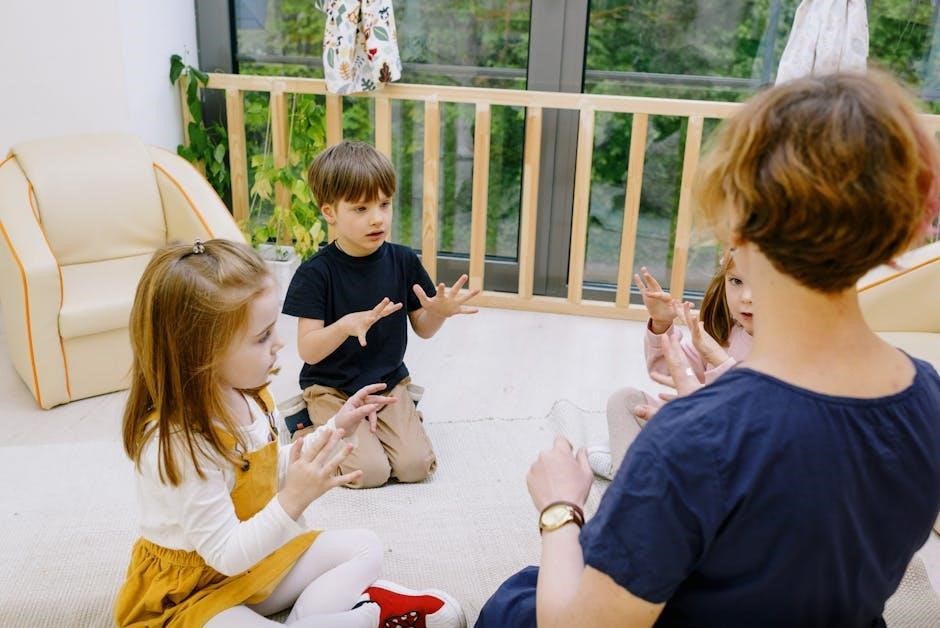
Don’t be discouraged! If your baby doesn’t immediately respond, remain consistent. Utilize a LSB PDF for correct form, and remember patience is key to success.
What if My Baby Doesn’t Respond?
It’s perfectly normal for babies to take time to respond to sign language. Don’t immediately assume it’s not working! Every baby develops at their own pace, and comprehension varies. Continue offering signs consistently, even if you don’t see immediate imitation.
Ensure you’re using clear, consistent signs – a LSB PDF guide can be incredibly helpful for verifying correct handshapes and movements. Also, consider your baby’s developmental stage; they may understand before they can physically produce the signs.
Reduce distractions during signing sessions and pair signs with spoken words. Most importantly, remain positive and enthusiastic! Your baby will pick up on your energy and be more motivated to engage.
Consistency is Key
Regular and consistent use of baby sign language is crucial for success. Integrate signs into your daily routines – mealtimes, bath time, playtime – to create a language-rich environment; Referencing a LSB PDF guide ensures you’re using the signs correctly and consistently each time.
Involve all caregivers – parents, grandparents, babysitters – in learning and using the signs. This unified approach prevents confusion for your baby. Don’t switch between signs for the same concept; choose one and stick with it.
Think of it like learning any new language; repetition and consistent exposure are vital for comprehension and retention. Patience and persistence will yield rewarding results!
Combining Signs
As your baby’s vocabulary grows, encourage more complex communication by combining signs. Start with two-sign combinations like “more milk” or “eat apple” to express simple requests or observations. A helpful LSB PDF resource can illustrate these combinations and offer guidance.
This step signifies a significant milestone in your baby’s language development, demonstrating their ability to form basic sentences. Don’t be afraid to model these combinations yourself, narrating your actions and using signs simultaneously.
Remember to keep it simple and focus on concepts your baby already understands. This fosters confidence and encourages further exploration of sign language!

Advanced Baby Sign Language Concepts
Advanced LSB involves nuanced facial expressions alongside signs, understanding initial attempts, and expanding beyond basics. LSB PDF guides can help refine these skills!
Using Facial Expressions with Signs
Facial expressions are integral to Baby Sign Language, mirroring the nuances of spoken language and adding emotional context to each sign. They aren’t merely supplemental; they are part of the message. A questioning brow with “Help” conveys urgency, while a bright smile with “Milk” expresses pleasure.
LSB PDF resources often highlight this, demonstrating how subtle shifts in expression can alter a sign’s meaning. Mastering these expressions enhances comprehension and encourages your baby’s receptive language skills. Think of it as adding tone of voice to your gestures – it’s what truly brings the communication to life. Consistent practice, utilizing LSB PDF guides, will help you naturally integrate these expressions.
Understanding Baby’s First Signs
Recognizing your baby’s initial attempts at signing is incredibly rewarding! These first signs are often approximations – don’t expect perfection. Look for intent and effort, even if the handshape isn’t quite right. Common first signs include “Milk,” “More,” and “Help,” as highlighted in many LSB PDF guides.
LSB PDF resources emphasize patience and positive reinforcement. Acknowledge and praise any attempt, gently correcting if needed. Remember, it’s about communication, not flawless execution. Observe when your baby signs – context provides crucial clues to their meaning. Celebrate these milestones; they represent significant steps in your baby’s language development!
Moving Beyond Basic Signs
Once your baby masters essential signs, expand their vocabulary! Introduce signs for animals, colors, and actions, utilizing thematic LSB PDF resources. Begin combining signs to create simple phrases – “More milk,” or “Eat apple.” This fosters more complex communication and cognitive development.
Many LSB PDF guides suggest incorporating signs into daily routines. Describe activities as you do them, signing simultaneously. Don’t be afraid to get creative and adapt signs to your baby’s understanding. Remember, consistency is key. Continued exposure and practice will solidify their sign language skills, opening up a whole new world of interaction!
Resources and Further Learning
Explore online communities and LSB PDF books for continued learning. Local classes offer personalized guidance, enhancing your baby’s signing journey and your confidence.
Online Communities for Baby Sign Language
Engaging with online communities provides invaluable support and shared experiences for parents learning Baby Sign Language. Numerous forums and social media groups dedicated to LSB, and often referencing helpful LSB PDF resources, allow you to connect with others on similar journeys.
These platforms are excellent for asking questions, sharing successes, and discovering new signs. You can find advice on troubleshooting, learn about regional variations, and access additional learning materials. Many groups host virtual meetups or share links to downloadable resources, including LSB PDF guides and sign charts. Participating in these communities fosters a sense of belonging and accelerates your learning process, enriching your communication with your baby.
Books on Baby Sign Language
Dedicated books offer a structured approach to learning Baby Sign Language, often complementing digital resources like LSB PDF downloads. Titles frequently cover foundational signs, practical application within daily routines, and troubleshooting common challenges. Look for books that include clear illustrations or photographs demonstrating correct handshapes and movements.
Sophie Dolce’s work is often cited as a valuable starting point, with materials sometimes available as supplementary LSB PDF guides. Books provide a tangible learning experience, allowing you to study at your own pace and build a comprehensive sign vocabulary. They often include sections on understanding your baby’s first attempts at signing and expanding their communication skills.
Local Baby Sign Language Classes
In-person classes provide a dynamic learning environment, offering direct interaction with an instructor and fellow parents. These classes often go beyond basic signs, incorporating songs, games, and role-playing to enhance learning and retention. While LSB PDF resources are helpful, a class allows for personalized feedback on your signing technique.
Search online for “baby sign language classes near me” to find options in your area. Many classes cater to different age groups, starting as early as six months. Supplementing class learning with a LSB PDF guide can reinforce concepts and provide additional practice opportunities. The social aspect of classes also fosters a supportive community for parents.



About the author